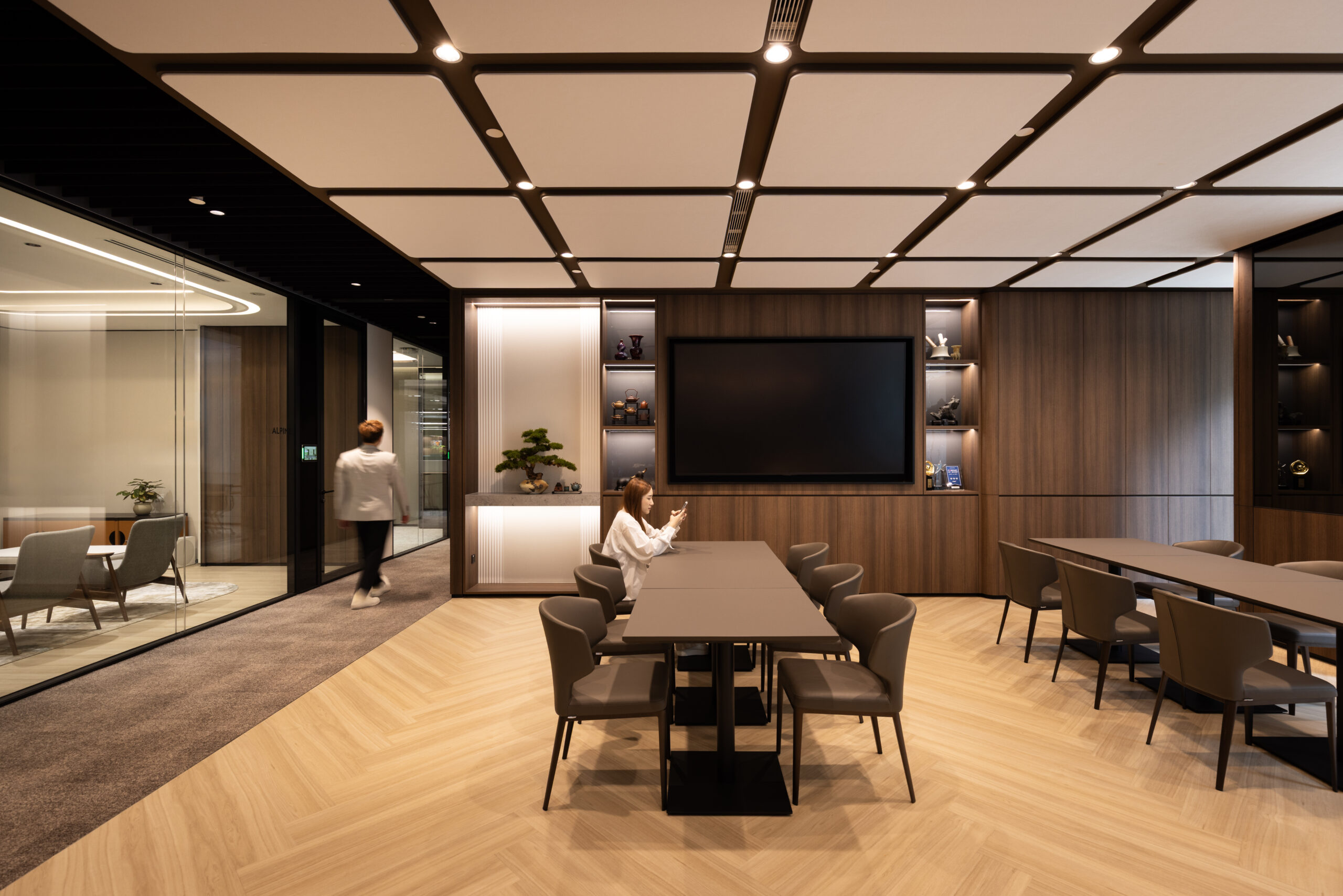
Not every office needs to look futuristic. But every office can be smarter.
Around the world, companies are rethinking what a “smart office” really means. For some, it’s been about adding the flashiest gadgets – AI-powered screens, robotic walls, voice-controlled everything. But the smartest workplaces aren’t defined by gimmicks. They’re defined by how seamlessly technology improves people’s daily experience, boosts business performance and supports sustainability.
At DB&B, we believe the future of workplace design is not about more tech, but about the right tech. And the offices that succeed are built around three pillars: people, performance and planet.
Breathing Easier: Smarter Air, Healthier People
Imagine walking into the office on a humid Monday morning. Instead of the stuffy, recycled air you half expect, the space feels fresh. That’s because an adaptive HVAC system has already detected the rising number of people and adjusted ventilation. Later, when a 12-person meeting packs into a boardroom, the system quietly increases airflow and filtration, preventing the “mid-meeting slump” from stale air.
This isn’t just about comfort. Real-time air quality monitoring – tracking carbon dioxide, particulate matter and VOCs – means healthier staff, fewer sick days and a more reassuring environment post-pandemic.
Lighting That Works With Us
At 9am, your desk glows with bright, cool-toned light that helps you stay alert. By 4pm, the tones soften, easing eye strain after a long day. Daylight sensors, typically installed at the perimeter windows, will trigger the system to dim artificial lighting as the sun streams in, cutting energy waste without you even noticing.
Smart lighting does more than illuminate; it supports circadian rhythms, reduces fatigue and improves mood. Done well, it doesn’t feel like “technology” at all – it feels like the office is tuned to your body clock.
Workplaces That Respond to People
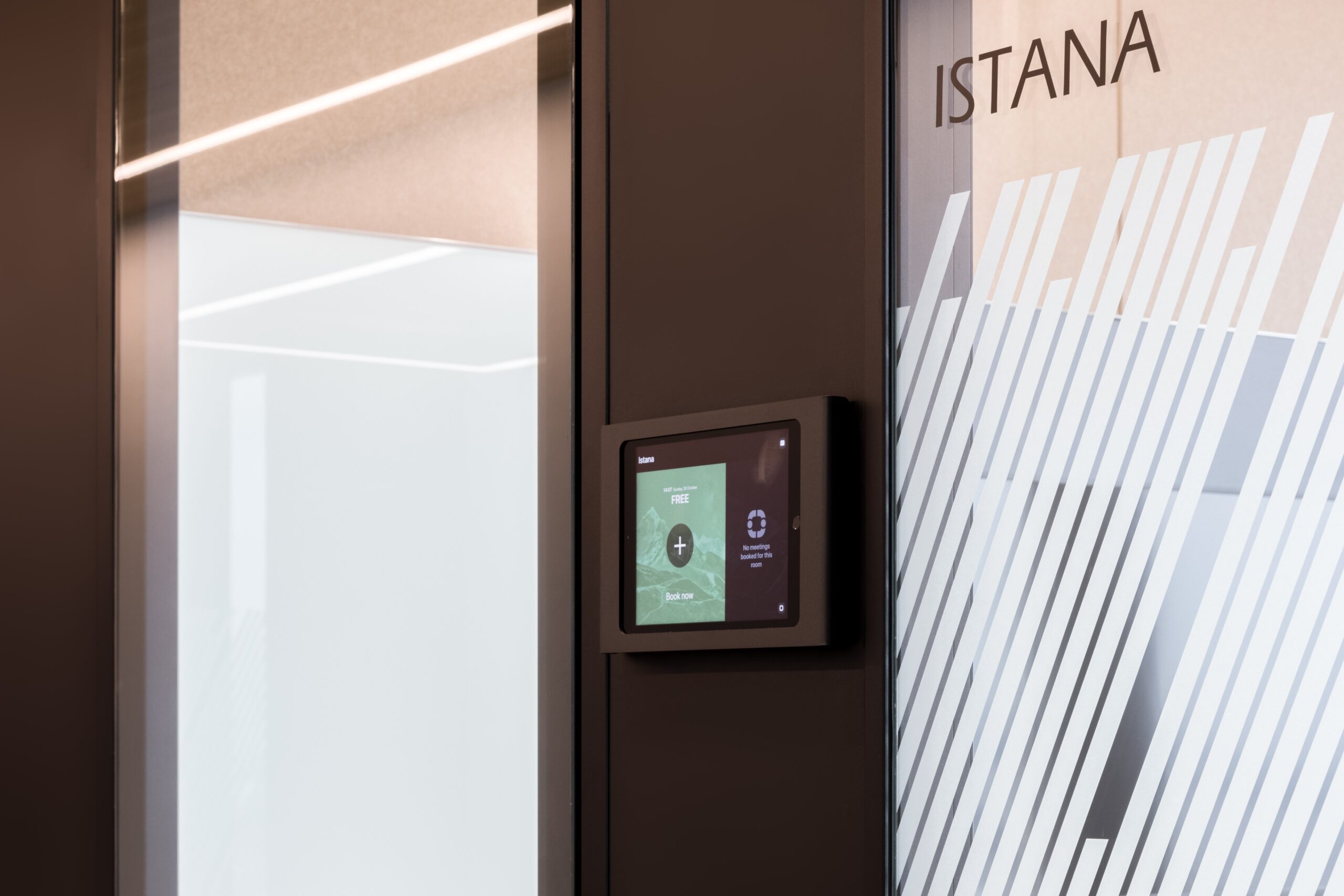
Picture this: you’re about to start a brainstorming session. Instead of wandering the floor hunting for space, you open an app, check room availability in real time and walk straight to an open collaboration pod. Inside, partitions can be shifted for privacy or opened up for a team huddle.
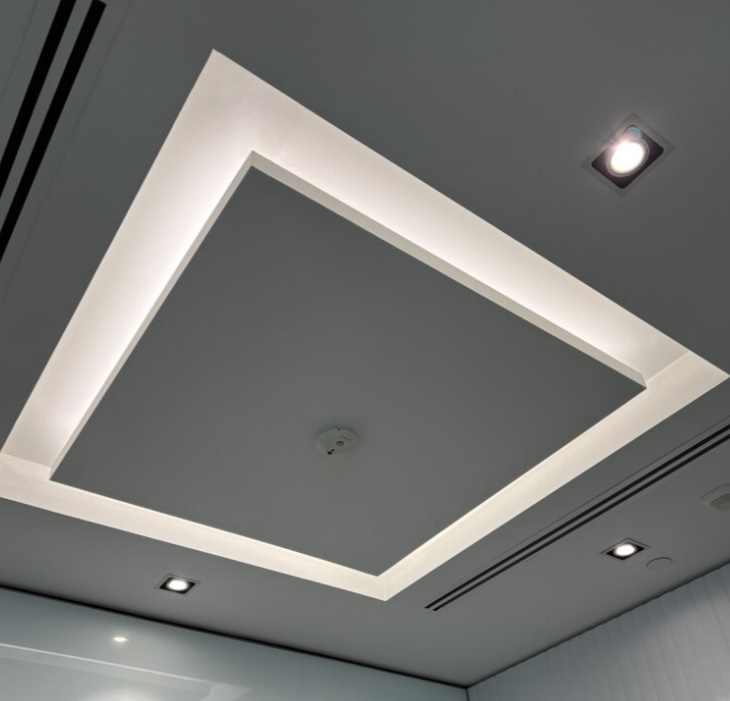
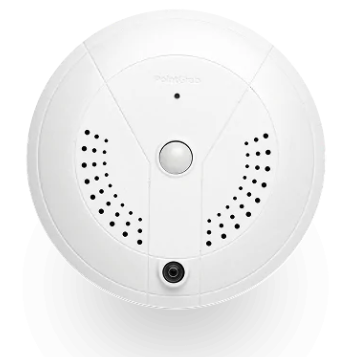
Meanwhile, occupancy sensors feed data back to facilities managers, showing which zones buzz with activity and which remain empty. Over time, this data shapes smarter layouts – ensuring offices aren’t just designed once but continuously improved.
As part of our smart office strategy, DB&B implemented a space occupancy and indoor air quality (IAQ) monitoring system integrated with a meeting room booking platform. Sensors discreetly track real-time data such as air quality, temperature, humidity, and occupancy levels, all visualized through a central dashboard. This live data allows facilities teams to quickly identify areas that require improved ventilation or thermal adjustment, while occupancy insights help optimize meeting room usage. Over time, these data points support smarter space planning, better energy management and a consistently comfortable environment for employees – turning the office into a responsive workplace that adapts to how people actually use it.
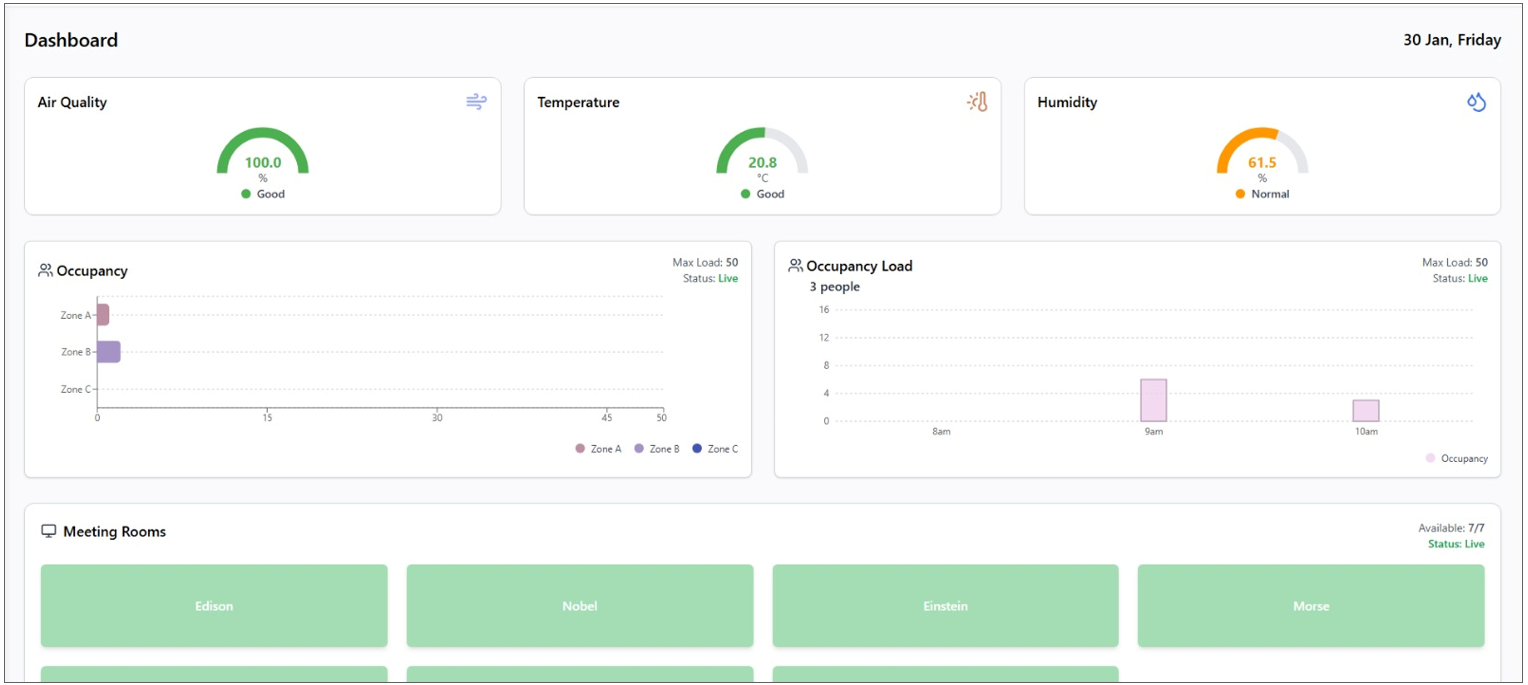
Energy That Works Smarter, Not Harder
At 7pm, most of the office has emptied out. Instead of cooling every corner of the building, the system automatically scales back in unused areas, maintaining just enough ventilation for safety. On the facilities dashboard, the sustainability manager sees energy usage drop in real time – proof that the office is saving both money and carbon.
This is where smart energy systems shine. From dashboards that integrate HVAC and lighting to smart meters tracking consumption by floor or department, companies now have the tools to make sustainability measurable and actionable.
The Human Touch
Technology is only successful when it feels effortless. If you need an instruction manual to turn on the lights, it has failed. The best smart offices are intuitive: you adjust the room booking app with a swipe, lights brighten automatically when you enter, and the air simply feels right.
In the smartest workplaces, people rarely notice the technology. They just notice how comfortable, efficient and inspiring the space feels.
The office of the future doesn’t need to resemble science fiction. It just needs to work better – for people, for business and for the planet. When applied with purpose, smart technology is invisible: the air feels fresher, the light feels natural, rooms flex to your needs and energy waste quietly disappears.
At DB&B, we believe the smartest office is one where people thrive, performance improves and sustainability is built into everyday life.