When people step into an office, they instantly form an impression – often before they’ve spoken to anyone. The color on the walls, the materials underfoot, the lighting, the flow of space – all of these subtly tell a story about who the organization is.
In today’s competitive landscape, workplaces are more than functional environments. They are physical embodiments of brand identity. A well-designed space doesn’t just support work; it communicates culture, values and purpose.
At DB&B, we see branding not as decoration, but as strategic storytelling through space.
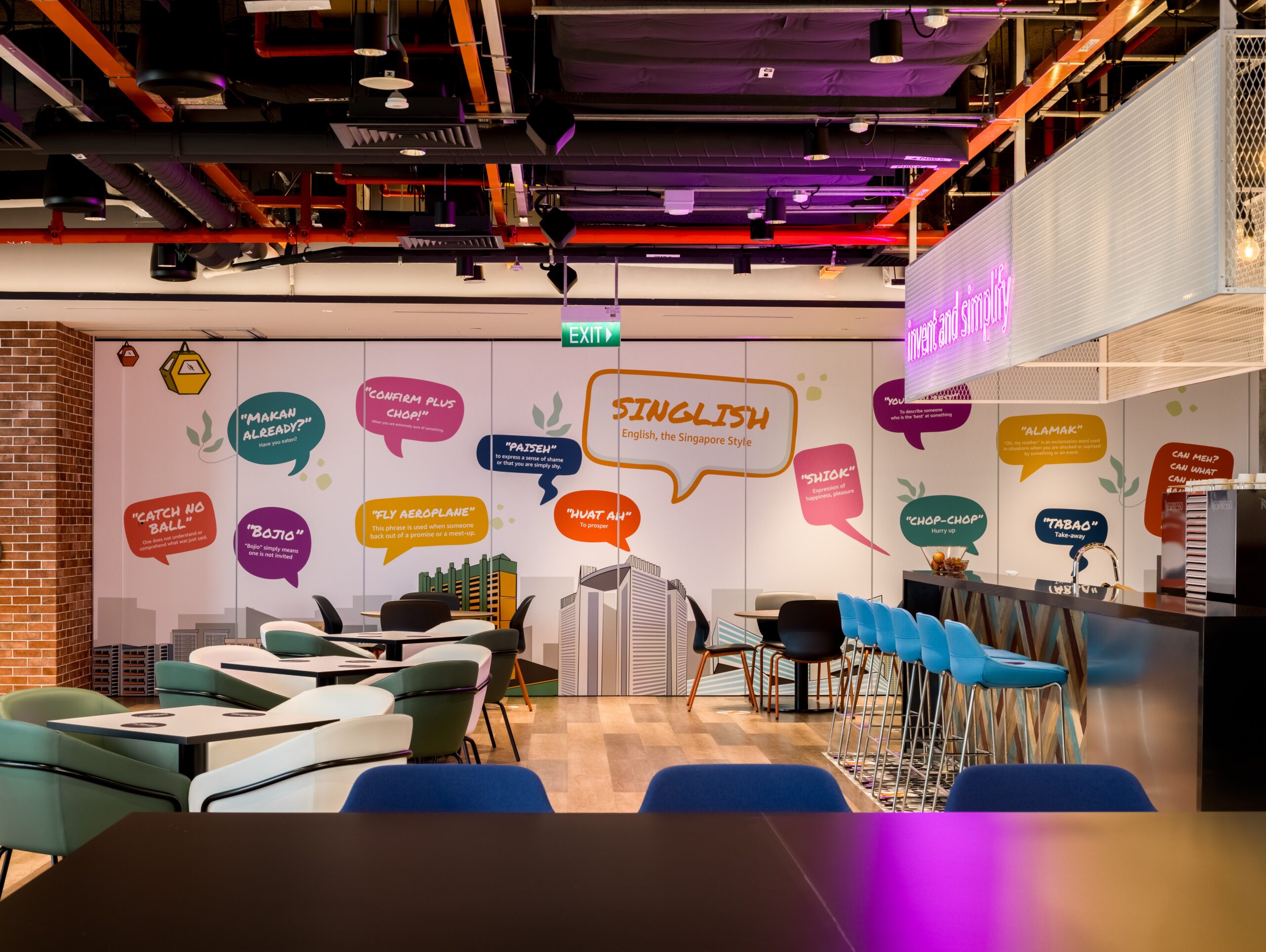
DB&B supported a global tech company to bring local culture into their workspace. Environmental branding isn’t just about looks – it’s about storytelling and connection.
Why Brand Expression Belongs in the Built Environment
Traditionally, branding was confined to logos and marketing materials. But as the workplace evolved into a central touchpoint for employees, clients, and partners, the brand experience had to expand – from digital to physical, from seen to felt.
When done right, a branded interior:
- Reinforces corporate culture by translating values into spatial behavior.
- Builds pride and belonging among employees who identify with the company’s story.
- Creates memorable first impressions for clients and visitors.
- Differentiates the organization in a sea of generic office environments.
Ultimately, every square foot of space becomes a communication tool.
Translating Brand into Design
So how does branding take form inside an office? It’s not about covering walls with logos. It’s about interpreting the brand’s personality and translating it into a sensory experience – what people see, hear and feel as they move through the space.
1. Color and Material Palette
The color palette is often the most direct connection to a brand identity, and when applied with strategic intent and creative flair, it becomes a powerful storytelling tool.
Material choices also speak volumes: natural wood can reflect authenticity; glass suggests openness; textured finishes evoke warmth and human touch.
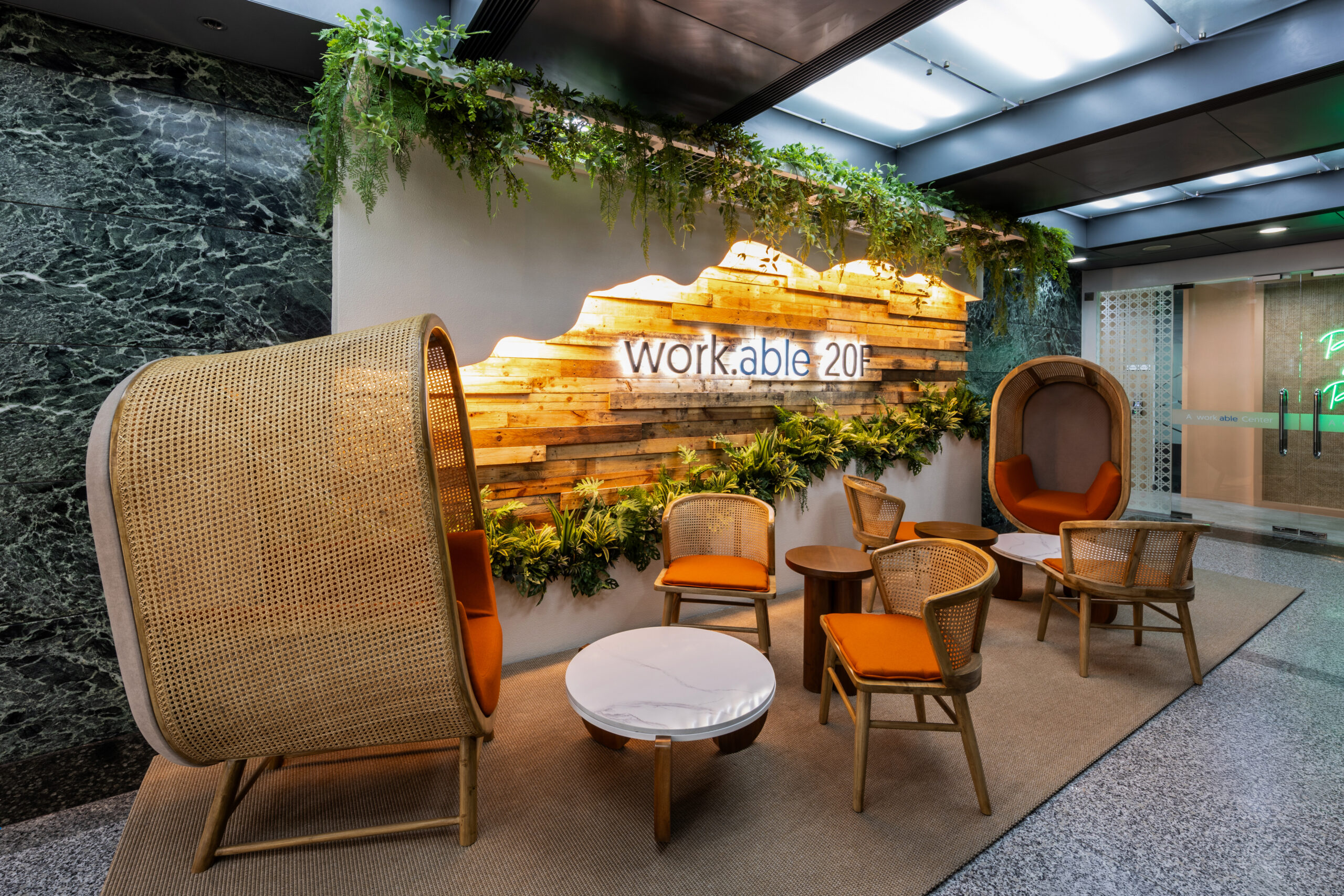
Work.able Philippines – Guided by local culture, the design at the reception integrates woven textures, organic forms and warm hues to create a space that is both welcoming and professional.
2. Spatial Planning and Behavior
Brand values can guide not only aesthetics but how people use the space.
- A company that champions collaboration may feature open lounges and shared tables.
- One that values focus and precision may lean on acoustic pods and controlled lighting.
Layout is culture made visible.
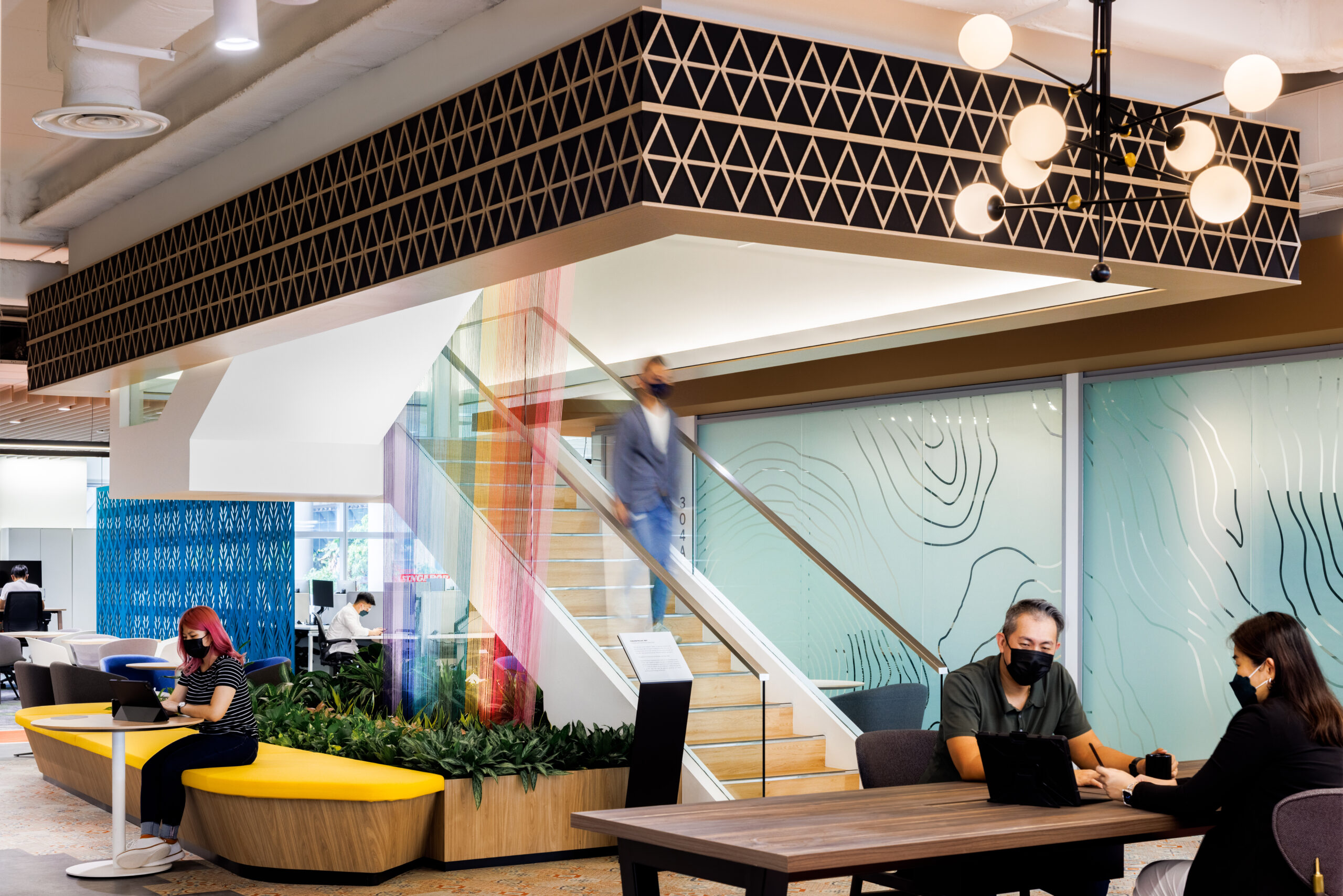
At SAP Singapore, in addition to the huddle spots injected amongst work benches, larger community spaces are carved out around the central staircase to motivate collaboration and interaction.
3. Graphics and Storytelling Touchpoints
Environmental graphics, signage, and curated art help articulate brand stories. Feature walls, digital displays and even subtle wayfinding can weave narrative layers throughout the office. Each element should add meaning, not clutter.
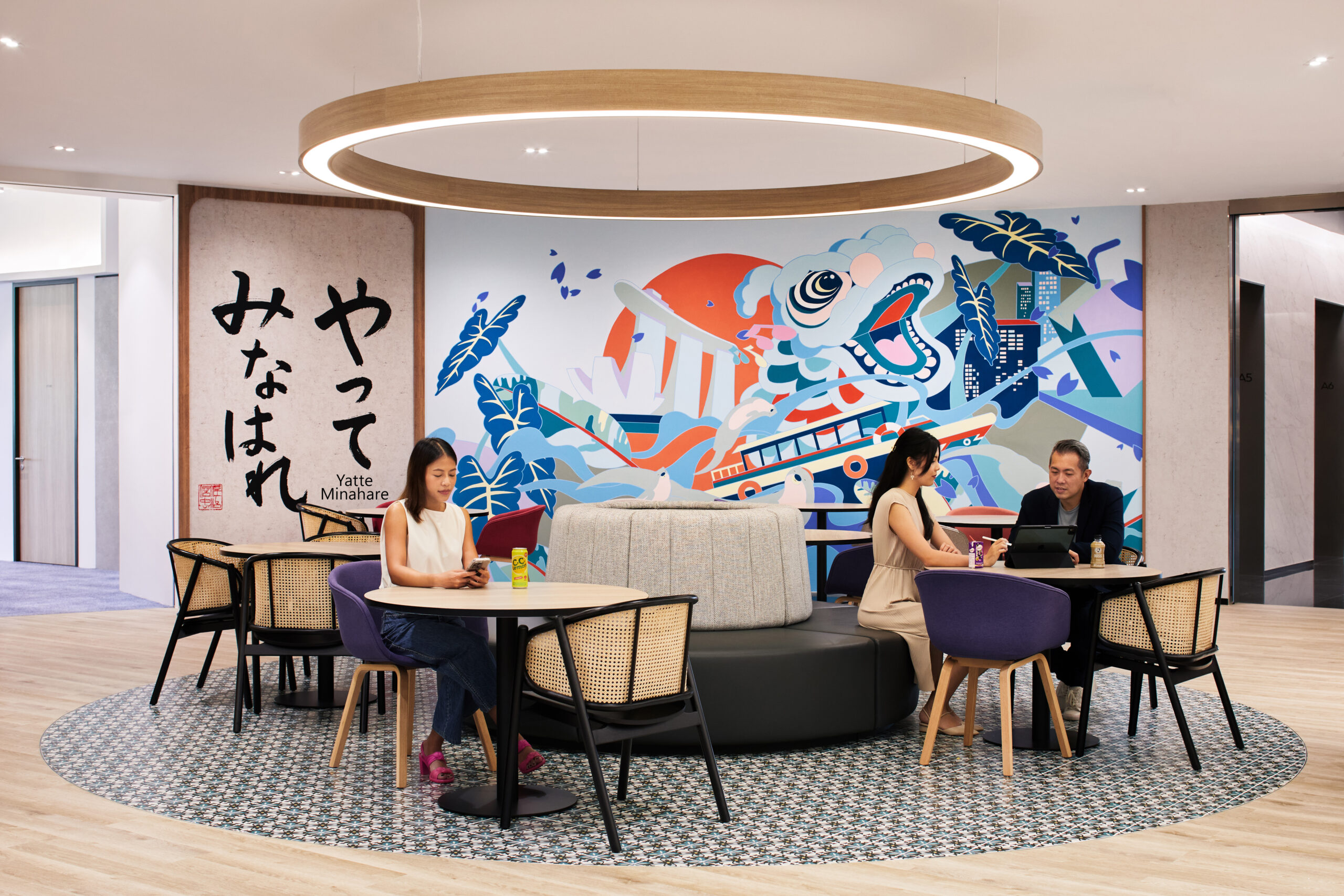
At Suntory Beverage & Food Asia, a hand-painted mural by a specialist artist captures both the brand’s presence in Singapore and the spirit of its founder, Shinjiro Torii. His iconic motto, “Yatte Minahare,” continues to inspire the team to embrace bold ventures and lead with entrepreneurial courage.

At Guangji Law Firm – Creative discussion areas are designed to foster informal conversations and brainstorming sessions. Branded floor graphics add a fun, energetic layer that brings the whole space to life.
4. Lighting and Atmosphere
Lighting sets tone. Bright and dynamic schemes project energy; warmer, diffused light conveys hospitality and calm. Increasingly, designers use dimmable lighting to create brand-specific ambience across zones.
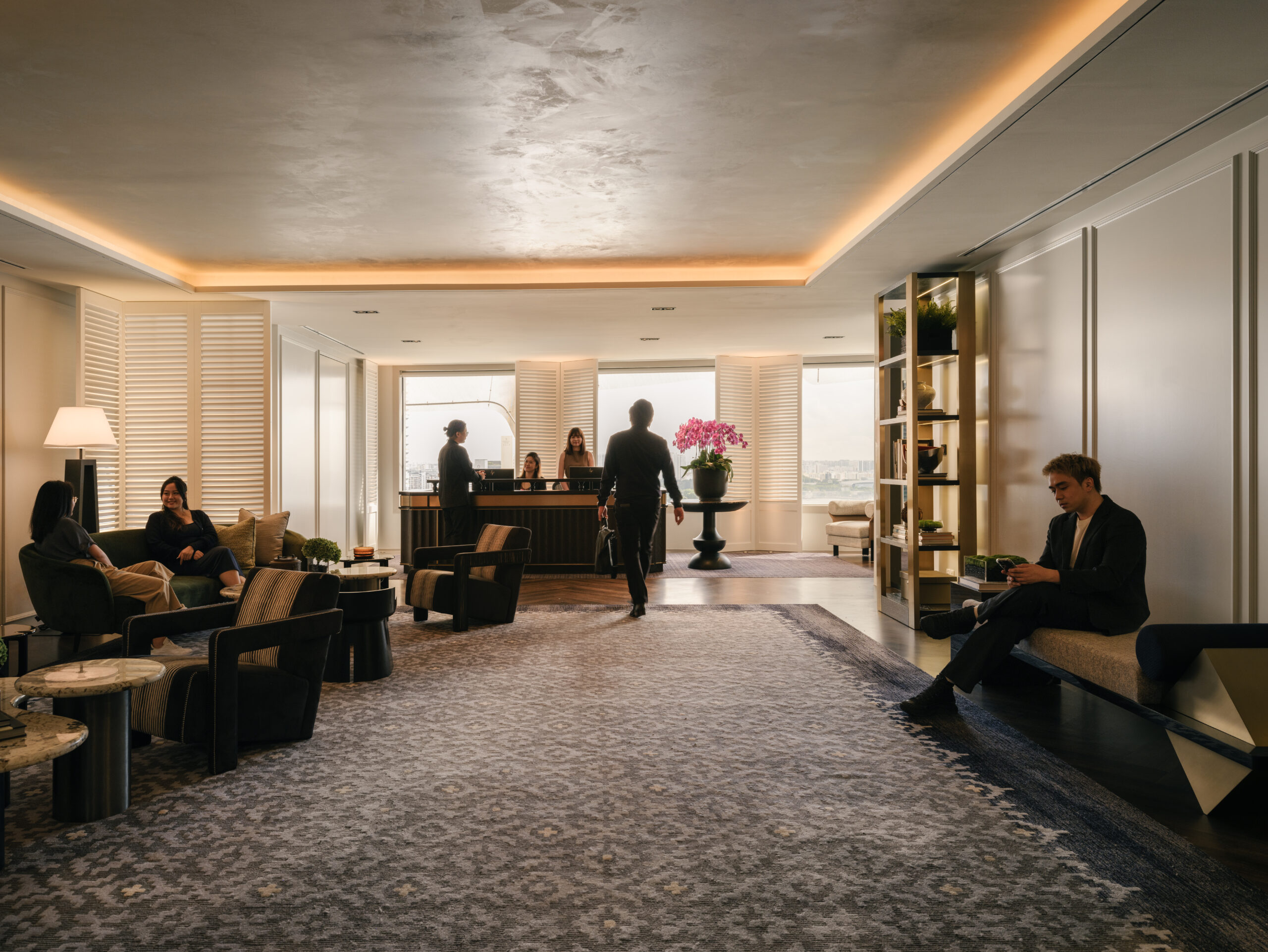
For a global hospitality company, a warm, inviting ambience defines the reception, with tactile materials and soft lighting quietly shaping a comforting arrival experience.
The Employee Experience as Brand Experience
Branding interiors is no longer about impressing visitors – it’s about inspiring people who work there every day.
Employees are the brand’s most powerful ambassadors. When the physical environment echoes the organization’s purpose, it nurtures emotional connection and pride.
A workplace that aligns with its brand promises – innovative, caring, sustainable, inclusive – strengthens culture and retention.
For instance:
- A healthcare company may design spaces that feel restorative – with natural light, soothing colors, and biophilic elements.
- A sustainability-driven business might showcase upcycled materials or visible recycling stations as tangible expressions of its values.
- A luxury brand might use precision detailing and tactile finishes to mirror its craftsmanship ethos.
In each case, the brand moves beyond a tagline – it becomes an experience.
Case in Point: Telling Brand Stories Through Space
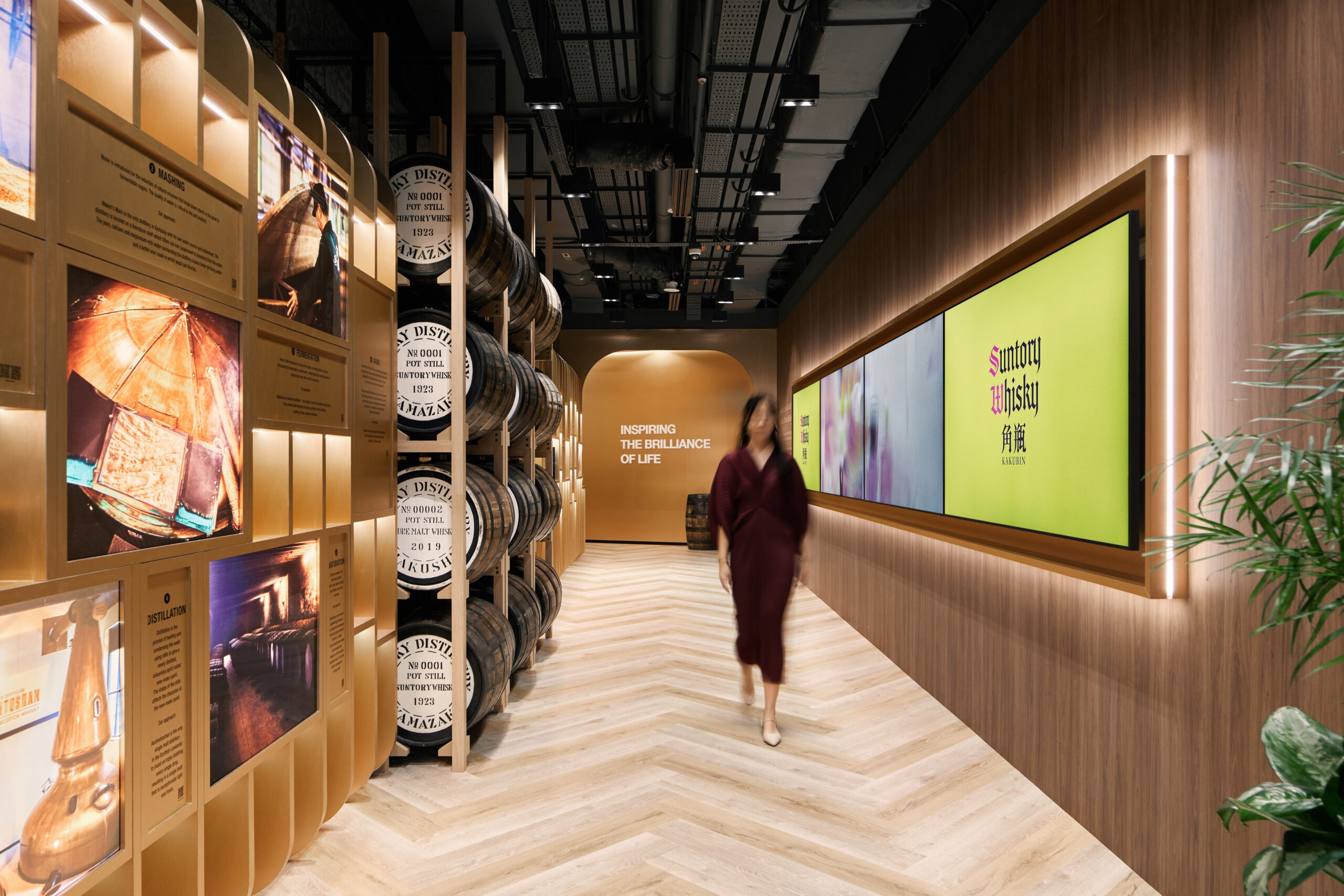
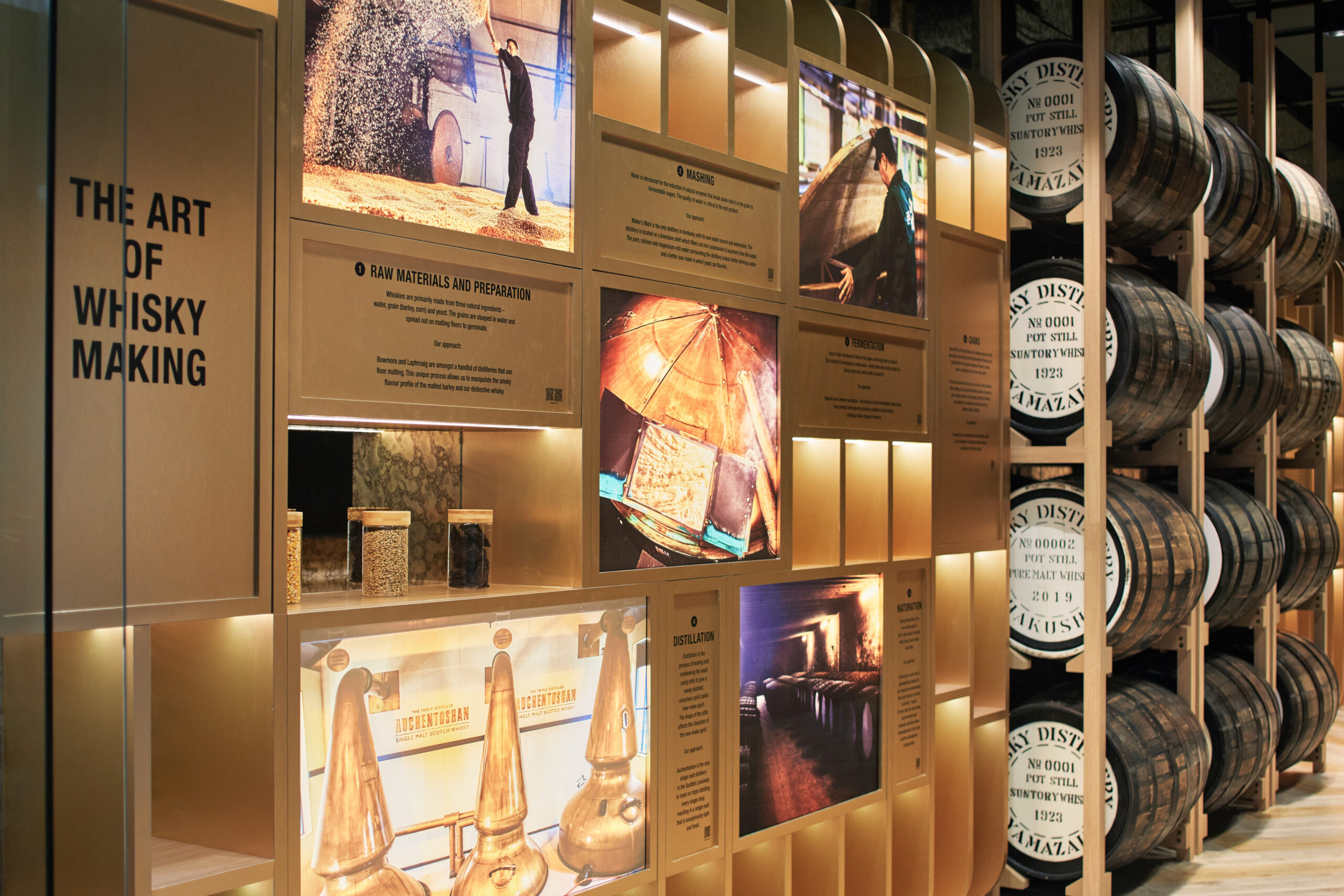
DB&B Singapore partnered with Suntory Global Spirits to design and build its new 18,000 square feet Singapore office, creating a premium workspace that supports 150 employees with fluid, collaborative environments. A defining feature of the project is the experiential entrance walkway, conceived to offer an immersive introduction to the brand’s world and its meticulous art of whiskey-making. Drawing from Japanese and American craft traditions, the walkway integrates tactile wooden barrels and a dynamic video mural showcasing Suntory’s history, processes, and iconic products.
Integrating Brand, Wellness, and Sustainability
Today’s clients increasingly ask: How do we express our brand while creating a healthy, sustainable workplace?
The answer lies in thoughtful integration. A brand committed to innovation might adopt smart technologies and adaptive lighting; one driven by well-being might emphasize natural ventilation and greenery.
Brand, wellness and sustainability aren’t separate – they reinforce each other to create spaces that feel authentic, responsible, and future-ready.
From Brand Guidelines to Brand Experience
Every project begins with understanding – not just the visual identity, but the essence of the organization. We start by asking:
- What emotions should the space evoke?
- How do people interact and move here?
- What story should visitors take away?
Once we translate those answers into spatial language, the result is a workplace that doesn’t simply carry a logo – it lives the brand.
Closing Thought
Branding an interior is about more than aesthetics. It’s about alignment – ensuring the space reflects the company’s purpose and the people who bring that purpose to life.
At DB&B, we design environments that speak without words – workplaces that embody identity, celebrate culture and leave a lasting impression long after you’ve left the room.
Because when design and brand are in harmony, the workplace becomes more than a space – it becomes a statement.