
Concept to Completion: Navigating the Commercial Design Process
In the evolving landscape of commercial interior design, staying ahead means integrating innovative trends with your brand’s culture. What are the latest trends that will make your space functional, appealing, and reflective of your business identity? This article provides practical insights into design strategies shaping today’s commercial interiors, helping you craft spaces that leave a lasting impression. Key Takeaways Commercial interior design should reflect a company’s brand identity, values, and vision, and consider the local culture, demographics, and economic profiles to resonate with the target audience and community. Effective space planning and layout, including functional zoning and compliance with safety regulations, are essential for enhancing efficiency, functionality, and safety in commercial spaces. Design development translates concepts into reality by carefully selecting colours, materials, and sustainable solutions, while architectural and MEP (Mechanical, Electrical, and Plumbing) drawings guide the construction process to ensure functional, compliant, and aesthetically pleasing commercial interiors. The Genesis of Commercial Interior Design: Defining Your Vision Becton Dickinson Transforming a commercial space into an environment that reflects your brand’s identity begins with defining your vision. Commercial interior designers start by understanding your company’s mission and core values and aligning them with the design. This alignment is the base upon which the rest of the design process is built, creating a commercial interior that not only resonates with your brand identity but also contributes to your business’s growth and success. Reflecting your business’s unique selling points is vital, but equally important is considering the locale where your commercial space will exist. Understanding these factors will ensure your commercial interiors seamlessly blend with the community, therefore enhancing the connection with your target audience and fostering harmonious integration. Crafting Your Business’s Identity Through Design DB&B, a commercial interior design company, goes beyond aesthetics. Our commercial interior designers translate your brand ethos into interior design through customised solutions. This process involves a careful selection of colours, materials, and finishes that are not just aesthetically pleasing and durable but also reinforce your brand identity. By offering top-notch interior design services, our professionals ensure that your commercial interior reflects the essence of your brand. Foliday Shanghai For instance, colour theory plays a pivotal role in commercial interior design. The conscious selection of colours is a process that takes into account their psychological effects, aligning them with your brand identity, space’s purpose, and user experience. Consider also the integration of biophilic design elements in commercial interiors. By connecting occupants with the natural environment, such designs can enhance your brand’s connection with natural elements, contributing to improved productivity and the well-being of users. Analysing the Locale: Aligning Interiors with Community Profiles Your interior design is significantly shaped by the locale of your commercial space. A thorough analysis of the economic profile of the locale can shed light on potential customers’ spending habits, guiding the overall design approach. Understanding existing businesses and the level of market saturation in the community ensures that your commercial space adds value and complements the economic ecosystem. Amazon Singapore Your commercial space should not only cater to your business’s functionalities but also resonate with the characteristics of surrounding businesses. This harmonious integration can enhance your connection with customers and leave a lasting impression. The Blueprint of Success: Space Planning & Layout Once the vision for your commercial space is clear, the next step is to translate this vision into a functional layout. Enhancing the functionality and efficiency of commercial spaces relies on creating designated functional zones and optimising traffic flow. For instance, a strategic arrangement of workstations and collaborative areas can encourage communication and teamwork. Collaboration between MEP consultants and design professionals is necessary to optimise functionality and aesthetics in the final commercial space. Flow and Function: Maximising Efficiency in Commercial Spaces Ensuring that every area serves its intended purpose, designers prioritise functionality in commercial spaces. This focus on functionality is key to enhancing both customer experience and employee productivity. Strategically planned layouts help reduce congestion, improving traffic flow, and thus facilitating better customer interaction with products. Moreover, the selection of furniture in commercial design significantly contributes to the space’s practicality and visual appeal. GoTyme Philippines Compliance and Creativity: Balancing Aesthetics with Regulations Commercial designers strive to create spaces that not only meet safety regulations and building codes but also contribute to a safe environment. Their ability to create spaces that are legal, functional, and aesthetically appealing is a testament to their expertise. For instance, a beautiful atrium can be designed with non-combustible glass and metal elements, creating a stunning visual effect while ensuring compliance with fire regulations. Materialising the Concept: Design Development Phase After space planning and layout, the design development phase comes next in the commercial interior design process. This phase is crucial in translating the initial concept into tangible design elements. It involves: The selection of interior colours Finishes Materials Light fixtures Furniture Decorative elements The application of colour psychology is essential in interior design. Warm colours like red, orange, and yellow can create an energising environment, while cool colours like blue, green, and purple aim to calm and focus occupants. In addition to colour selection, customising furniture according to specific requirements is also a part of this phase. For instance, in-house carpentry teams can redesign pieces on request, allowing you to have furniture that perfectly suits your needs and aligns with your brand guidelines. Cohesion and Contrast: The Art of Selecting Design Elements Creating a cohesive commercial interior design involves selecting elements that work well together to establish a balanced and harmonious atmosphere. This is achieved by balancing the scale of furniture and architectural features to create spaces that are both functional and aesthetically appealing. For example, utilising biophilic design elements and ergonomic furniture adds contrast while boosting comfort and satisfaction in commercial settings. These elements contribute to a design that is visually pleasing, functional, and resonates with your brand’s identity. Sustainable Solutions: Eco-Friendly Materials in Commercial Design Sustainability transcends being a trend to becoming a necessity. Eco-friendly materials such as reclaimed wood, bamboo, cork, recycled metal, or
The Role of Biophilic Design in Enhancing Employee Wellbeing and Productivity
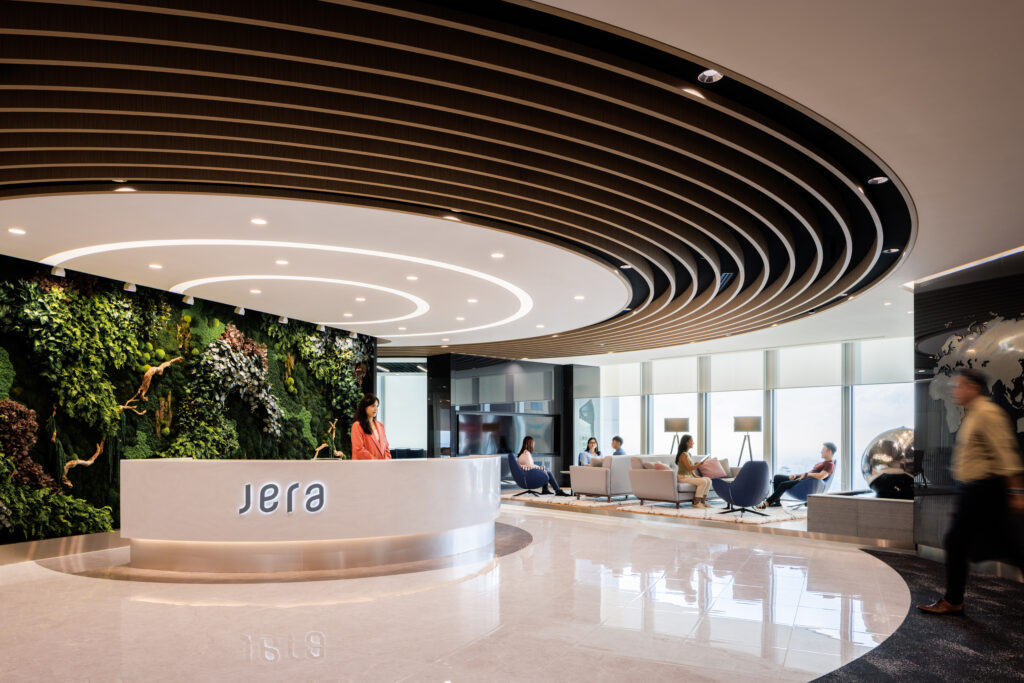
What exactly is biophilic design, and why are modern interiors increasingly embracing it? At its core, biophilic design is about infusing our workspace with natural elements to satisfy our innate affinity for nature—promising an enhanced sense of well-being and productivity. This article unfolds the essence of biophilic design, the scientific reasoning behind its benefits, and actionable ways to integrate natural patterns into your workspace. Key Takeaways Biophilic design fosters a connection to nature within built environments, satisfying a deep-seated biological need for natural elements and forms in our daily lives. Incorporating biophilic design in workspaces has scientifically proven benefits, enhancing mental well-being, physical health, and productivity through connections with the natural world. Successful implementation of biophilic design can range from the integration of natural light and plants to the use of natural materials like wood, stone, bamboo, etc., significantly transforming commercial spaces and improving job performance and well-being. JERA Understanding Biophilic Design: A Connection to the Natural World The concrete jungles we navigate daily often leave us yearning for a touch of the natural world. Biophilic design emerges as a bridge between these urban environments and the lush landscapes we instinctively crave. Rooted in the concept of ‘Biophilia,’ it is more than an aesthetic choice; it’s a design ethos that weaves the richness of natural environments directly into the fabric of our built environment. The Essence of Biophilia At the heart of biophilic design lies an ancient connection that echoes through our DNA – the bond we share with the natural world. This bond is not just about enjoying a picturesque view; it is a biological need, ingrained through our evolution, where our survival and flourishing hinge on our harmony with nature. By integrating natural elements and natural forms that evoke the beauty of the natural world, including natural landscapes and natural patterns, from the patterns of leaves to the textures of bark and stone, we touch a part of ourselves that modern society often neglects. In doing so, we also appreciate the diversity of natural shapes that surround us. Core Principles of Biophilic Design Biophilic design is not merely placing a potted plant in the corner of a room. It is a mindful approach to creating spaces that embrace the essence of nature through specific, intentional biophilic design principles. The Science Behind Biophilic Design: Enhancing Human Health and Productivity Embarking on the journey of biophilic design is not just a visual pleasure; it is a scientifically backed pathway to enhanced human health and productivity. Boosting Mental Well-Being The gentle rustle of leaves, the soft daylight filtering through a canopy, and the rich aroma of the earth—these sensory experiences in nature are not just pleasurable, they are therapeutic and contribute to better air quality. Elevating Physical Health and Immunity It’s not only our mental health that flourishes with a touch of green; our physical health also reaps the benefits of biophilic design. Amplifying Focus and Productivity In the rhythm of today’s work-life, maintaining focus and driving productivity is paramount. Biophilic design leverages the restorative power of nature to sharpen our minds and enhance our work performance. SAP ASIA Biophilic Elements: Bringing Life to Commercial Buildings As architects and interior designers seek innovative ways to revitalise commercial buildings, incorporating environmental features and biophilic elements stands out as a beacon of vitality and innovation. Incorporating Natural Light and Ventilation The interplay of natural light and shadow within a space can elevate a mundane setting to an engaging environment. It allows the natural progression of daylight to indicate the passage of time, while improved ventilation contributes to a refreshing and revitalising atmosphere. Integrating Green Walls and Indoor Plants From the vertical gardens of ancient civilizations to the modern green walls of cityscapes, plants have always been integral to human spaces. Utilising Natural Materials and Textures Nature’s array of materials brings distinct textures and functional properties to the workplace—wood grain’s visual warmth, stone’s solid resilience, and the tactile diversity of natural fibres. These natural features showcase the beauty and diversity of our planet. Strategies for Implementing Biophilic Design in Your Workspace While the advantages of biophilic design are evident, the process of incorporating it into existing workspaces may appear complex. Small Changes, Big Impact Transforming your workspace with elements of nature doesn’t necessarily mean committing to extensive renovations. Corporations should analyse their current environments to identify opportunities for subtle, yet strategic, additions that can yield significant benefits. Simple changes like adding indoor plants, maximising natural light, incorporating natural materials, and improving ventilation can greatly enhance the work atmosphere, boost employee well-being, and improve job performance. Positioning Biophilic Design Interventions Strategic positioning is key to maximising the benefits of biophilic design interventions. It’s not just about what elements are introduced, but how and where they are placed within the workspace. For instance, a large potted plant can be placed in the reception area to make a positive first impression, while smaller plants on desks can enhance personal workspace aesthetics. Summary The integration of nature into our work environments is more than a trend; it’s a vital component of creating spaces that nurture our bodies, minds, and spirits. Frequently Asked Questions What is biophilia? Biophilia is the natural love humans have for nature and living things. It is an innate connection with the natural world. How does biophilic design enhance creativity and problem-solving? Biophilic design enhances creativity and problem-solving by incorporating natural elements, such as materials, shapes, and artwork, which have been linked to increased creativity and improved problem-solving abilities. For instance, a brainstorming room with a wooden table, stone accents, and plants can evoke a sense of calm and creativity, making it easier for teams to think outside the box. How does biophilic design support physical well-being in the workplace? Biophilic design promotes physical well-being in the workplace by offering outdoor spaces, encouraging physical activity, breaks from sedentary work, and relaxation, leading to a healthier lifestyle and a decreased risk of chronic diseases. How does biophilic design contribute to positive mood and job
Creating a Cohesive Hybrid Office Design: Strategies for the Modern Workplace
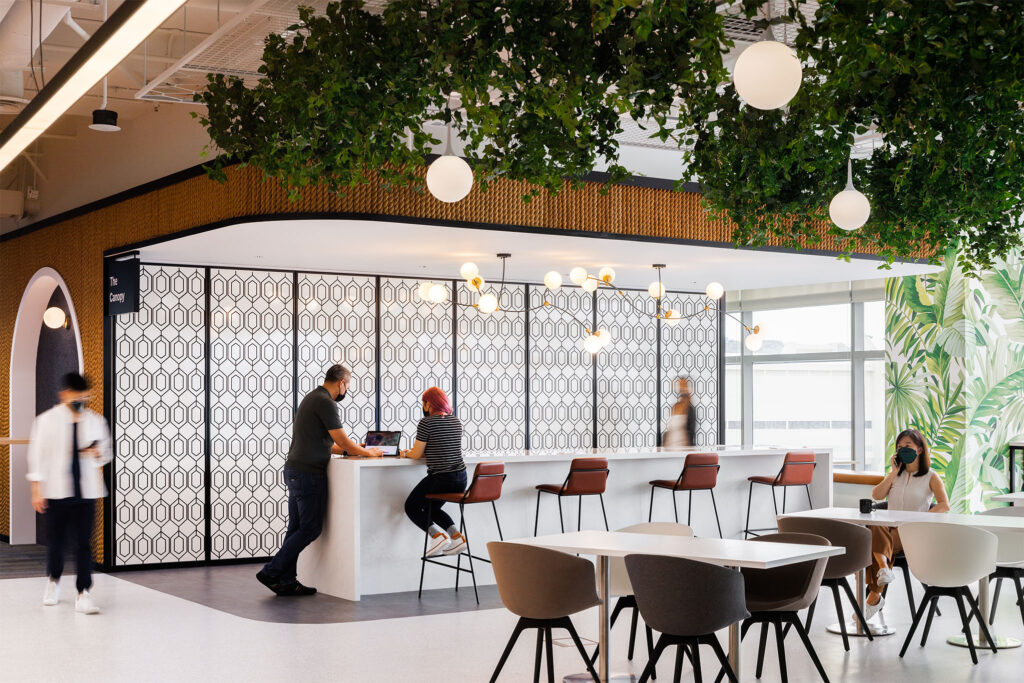
Wondering how to merge home-office flexibility and in-person collaboration? Effective hybrid office design focuses on this blend. Learn strategies for creating adaptable, tech-integrated workspaces that reflect your company’s culture and support your team’s efficiency and well-being, both in-office and remotely. Dematic Singapore The Role of Psychogeography in Hybrid Office Designs Psychogeography is the study of how the environment affects emotions and behaviour, and it relates to office design by creating emotionally resonant and inspiring spaces to enhance employee satisfaction and engagement. Becton Dickinson By employing emotional mapping and strategic design elements, the workplace can transform into an environment that not only meets functional requirements but also emotionally engages employees, offering inspiration and solace throughout their work journey. Transformative Design Strategies in Practice Transitional Doorways: They symbolise a passage from the bustling outside world into the focused environment of the office. Designers can emphasise this journey by employing distinct textures, a palette of colours, and strategic lighting to delineate these thresholds, thereby setting the stage for employees to mentally shift into their professional roles as they enter. Guiding Illumination: The strategic use of lighting, especially the soft glow of natural sunlight, is pivotal in shaping the flow and concentration within an office landscape. Sunbeams streaming through windows can beckon employees to shared spaces or provide gentle illumination in tranquil nooks for solitary work. Similarly, artificial light can be provided to create visual pathways, demarcating different functional zones and enhancing the overall navigability of the office environment. The Palette of Productivity: Leveraging the psychology of colour is an ingenious way to sculpt the emotional contours of a workspace. Shades of blue and green, embodying the cool end of the spectrum, are conducive to serenity and focus, ideally suited for areas dedicated to individual tasks. On the other hand, the warm vibrancy of yellows and oranges can invigorate and spark innovation. Harmonising Work with Sound: The auditory landscape of an office can profoundly influence both concentration and privacy. By integrating materials that dampen noise and generate a background hum of white noise, a sense of acoustic confidentiality can be established. In contrast, designing specific areas to amplify natural sound can energise collaborative zones, fostering dynamic exchanges and teamwork. Beam Suntory Cultural Narratives in Spatial Design: Weaving cultural narratives and artistic elements into the fabric of office design not only enhances aesthetic appeal but also infuses the environment with stories and creativity. Displays of art, historical artefacts, or design features that mirror the company’s heritage and ethos can cultivate a unique identity and foster a sense of community. Biophilic Design: Integrating elements from nature into the office not only purifies the air but also bolsters mental health. Features like green living walls, indoor botanical gardens, or simple potted plants on desks can create a seamless connection between the natural outdoor world and the indoor office environment, fostering a tranquil and rejuvenating atmosphere for employees. Flexibility and Evolution in Workspace Design: With the employment of movable walls, multipurpose furniture, and modular setups, the office can seamlessly transition from a space of communal innovation to a private haven for focused tasks, embodying the psychogeographic ideal of a responsive and ever-changing environment. Crafting the Future Workspace: Embracing Hybrid Office Design As we sail into the future of work, hybrid office design stands at the helm. A burgeoning preference among employees for hybrid work models has been noted, signalling the need for businesses to adapt swiftly. This approach to office design is not just about creating varied workspaces but about intentional design that embraces flexibility, central community spaces, and data-driven planning. The benefits are tangible: increased productivity, a better in-office experience, and the ability to draw and retain talent. The hybrid workplace is more than a fleeting trend—a cultural shift towards diverse and flexible working environments. The Pull of Physical Spaces The allure of a well-designed physical office can be magnetic. Weaving in employee feedback to tailor office design ensures that the space is not just a place but a destination that beckons for collaborative work. It is about crafting environments that resonate with the daily rhythms and needs of the staff, making the office a place they want to return to. It is a dance of design, where the physical environment echoes the company culture, fostering a sense of belonging and productivity. Shopee Bridging the Gap for Remote Workers Even as we celebrate the flexibility of hybrid work, it’s paramount that our remote colleagues remain tethered to the heart of the company. Hybrid offices are not just physical spaces but bridges that connect remote workers to their in-office counterparts. They should radiate a warmth that spans the digital divide, ensuring remote team members feel that vital emotional connection to their peers and the company’s pulse. Embracing remote work as a part of the hybrid model is essential for maintaining this connection. Regular communication and inclusion in team activities are the lifelines that prevent feelings of detachment. The Essence of Hybrid Office Layouts The hybrid office layout is a symphony of spaces that harmonise the needs of both in-office and remote workers. It is an intricate design that marries face-to-face collaboration with the independence of remote working. The transformation of office spaces into flexible, activity-based zones stems from careful data analysis of how spaces are used, ensuring every square foot serves a purpose, be it for collaboration or focused work. The evolution of office furniture reflects this shift, with pieces now designed to cater to flexibility, mobility, and functionality. Zones for Collaboration and Focus Within the hybrid office, the creation of zones for collaboration and focus is a testament to adaptability. Some key features of the hybrid office include: Flexible furniture and technology like movable desks and digital screens that enable spaces to transform in tandem with the task at hand Ergonomic designs that prioritise employee well-being and comfort Infusion of natural light to create a more pleasant and productive work environment These features are essential for well-being and, by extension, the productivity that emerges from an
DB&B China Celebrates Triple Win at the 2023 MUSE Design Awards Season 2
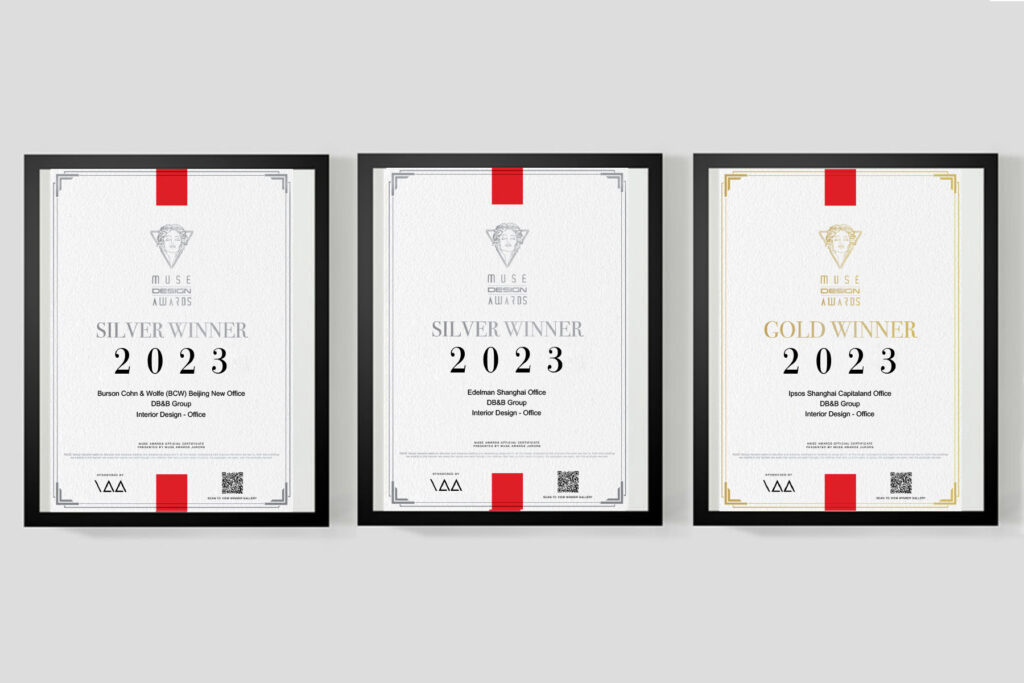
CHINA – The 2023 MUSE Design Award Season 2 have announced the list of winners. With more than 10,000 entries around the world, the esteemed international competition promises to be a celebration of innovation, creativity, and excellence in the field of design. This season, DB&B has proudly secured two Silver Awards and one Gold Award – Burson Cohn & Wolfe (Silver) located in Beijing, Edelman (Silver) and Ipsos (Gold) both located in Shanghai. “Our China Team has demonstrated exceptional talent and creativity, earning three prestigious awards in the Muse Design Award 2023 Season Two. This accomplishment is a testament to their dedication and innovative approach to design”, says Billy Siew, Managing Director of DB&B Group. For more project photos on Burson Cohn & Wolfe Beijing, please click here. For more project photos on Edelman Shanghai, please click here. For more project photos on Ipsos Shanghai, please click here. Click here to view other award wins in 2023.
DB&B Philippines Walks Away Victorious in the 2023 MUSE Design Awards Season 2
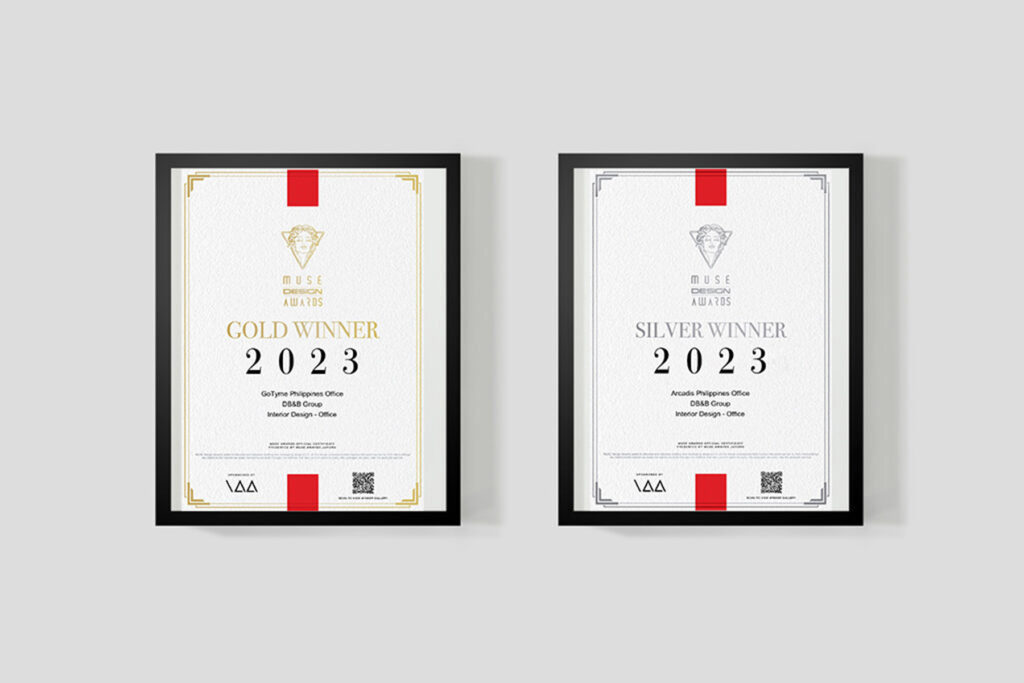
Manila, Philippines – The MUSE Creative and Design Awards, leading competitions that honor creative and design professionals, have released the list of winners for its second competitive season of 2023. The awards saw as many as 6,500 entries submitted from across the world, all vying for a chance to be honored as a MUSE. For this competitive season, DB&B Philippines walks away victorious with two awards – GoTyme (Gold) and Arcadis (Silver). “We are deeply proud of our Philippines team who has worked so hard to go beyond the brief and do things differently. These awards are testament to our vision of always making a difference in the work we do,” says Billy Siew, Managing Director of DB&B Group. For our full design story on GoTyme, please read here. For our full design story on Arcadis, please read here.
DB&B x Office Concept: Representing Design Philosophies
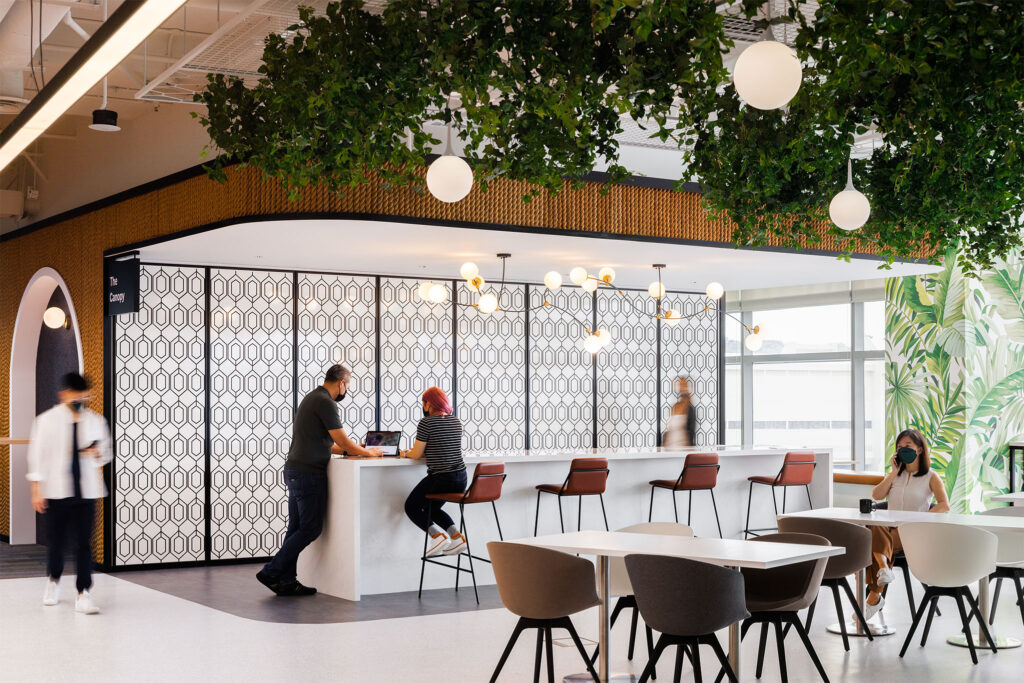
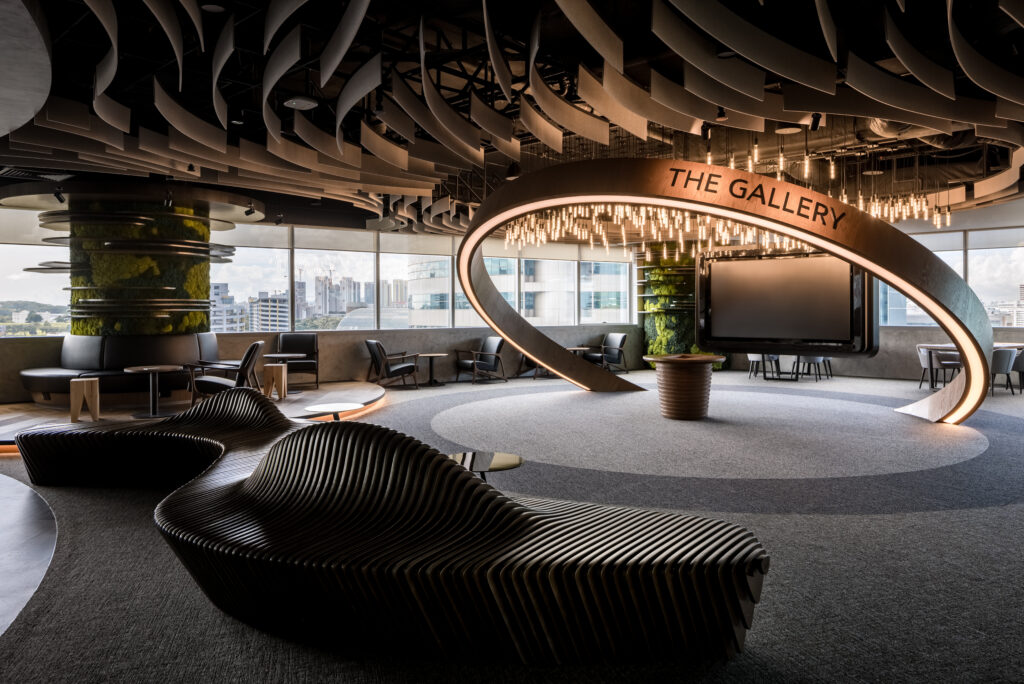
The latest issue of Office Concept 2023 features 11 projects from around the region. Discover the journey behind our work for our newly-refurbished DB&B headquarters in Singapore, SAP, Foliday, Amazon, GoTyme Bank, Jera, BP Semiconductors, Arcadis, a financial services firm, a security company and a global quantitative asset management firm.
DB&B Clinches Third Design Award For Amazon and SAP
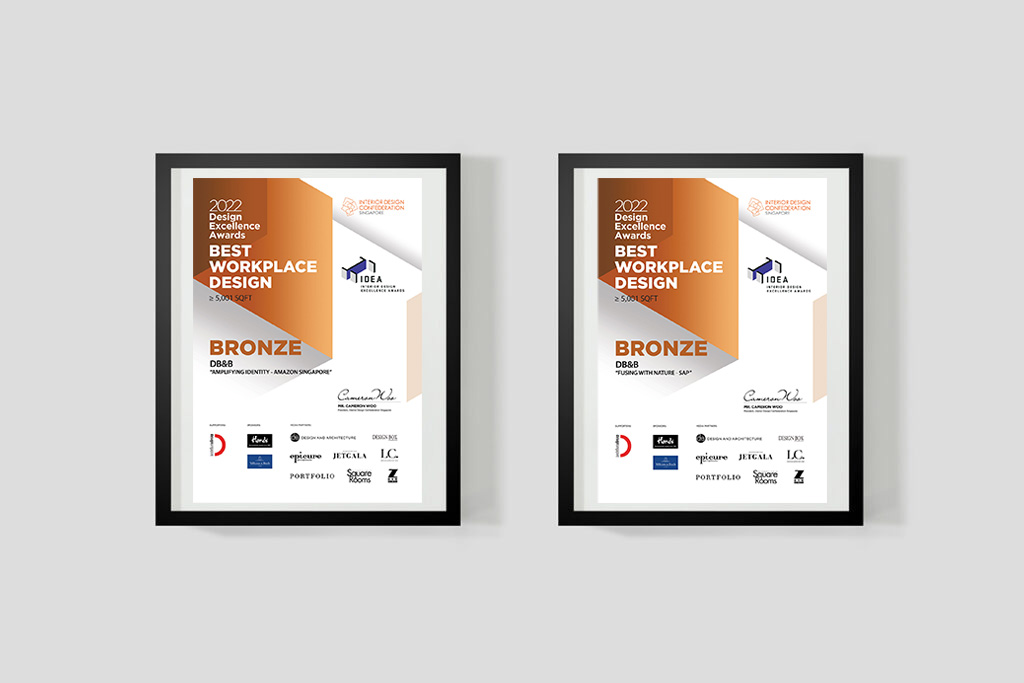
SINGAPORE – The DEA 2022 marks DB&B’s 5th consecutive year of recognition from IDCS for their exemplary work in interior design. With Amazon and SAP clinching the Bronze Award in the Best Workplace Design ≥ 5001sqft category, DB&B celebrates the third design award for both projects this year. Past winning entries from DB&B include Becton Dickinson, Garena, Shopee and Distrii offices. Considered an industry seal of excellence, the DEA 2022 received a total of 246 entries in two tracks: The Interior Design Excellence Awards (IDEA) for completed built projects by industry professionals; and the Spatial Design Awards (SPADE) for completed academic projects by design students. The IDEA section received 162 IDEA entries in 26 categories, while the SPADE section received 84 entries in the 9 student categories. “IDCS received entries from Singapore, Malaysia, Hong Kong, Japan, Taiwan, China, India, South Korea, Philippines and Thailand, and the variety of projects across countries made it very interesting to judge,” said Mr Cameron Woo, President of IDCS. “We are very honoured to be recognised by IDCS once again. For both projects, our teams sought to help the companies achieve their operational and branding goals while envisioning offices of the future. We are motivated and will constantly challenge ourselves to create resilient and purpose-driven designs, “says Jeanette Siew, Executive Director of DB&B. Click here to read the full design story for Amazon . Click here to read the full design story for SAP .
DB&B Shanghai Clinches a Double Win at the 2022 MUSE Design Awards Season 2
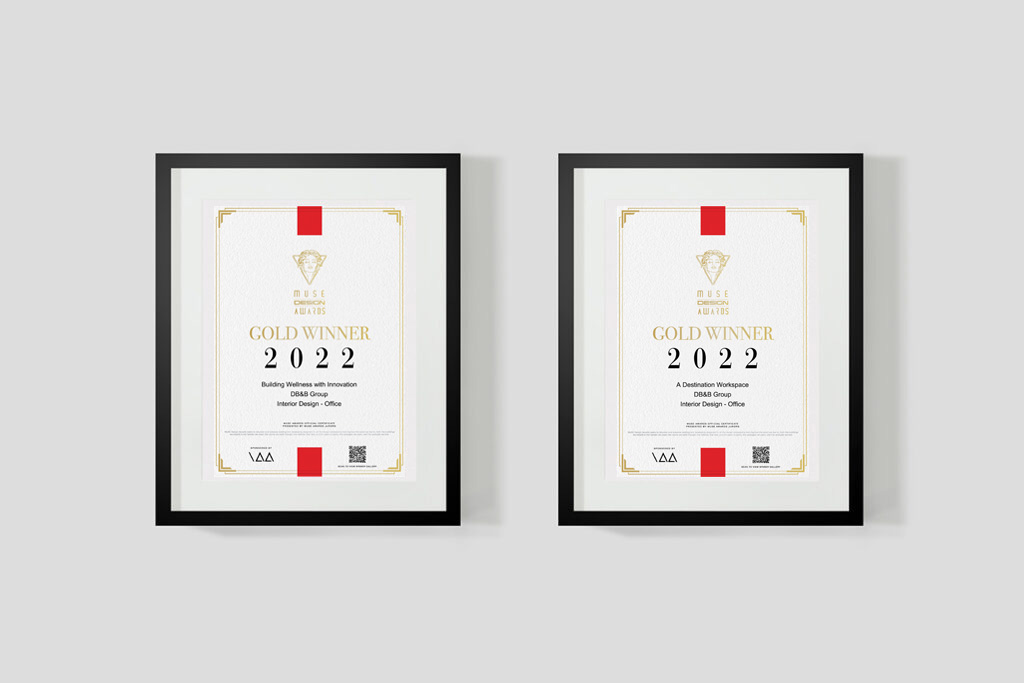
CHINA, SHANGHAI – The 2022 MUSE Design Awards Season 2 have officially drawn to a close, after officially announcing the winners. With well over 6,000 entries entered from all over the world, the competition has shown itself to be one of the leading programs in honoring creative and design excellence. This year, DB&B clinched two Gold Awards in the competition for season 2. The winning works were created for Foliday and Bright Power Semiconductors – both projects are located in Shanghai. “We are thankful to have secured this double win amongst thousands of design entries – this is a recognition of our hard work and a motivation for our team to continuously innovate and create forward-thinking work spaces.” says Billy Siew, Co-Founder and Managing Director of DB&B. For our full design story on Foliday, please read here. For our full design story on Bright Power Semiconductors, please read here. Click here to read about our other MUSE Design award Season 1 wins in 2022. About MUSE Awards The MUSE Awards is a series of international competitions hosted by the International Awards Associate (IAA), catering to professionals from various industries in hopes of promoting excellence in their respective fields. “The IAA team was caught off-guard by the works submitted for the second season of 2022’s MUSE Awards. These entries were truly astounding, and they certainly bring the level of competition up a notch,” Thomas Brandt, spokesperson of IAA, noted. “It’s amazing as always to witness great works lined up in the competition. The team is absolutely in awe of the level of creativity and ingenuity that is in the industry.” IAA ensures impartiality and strict assessment criteria by setting up a jury made up of industry professionals who exhibit high standards of excellence. In turn, the jury would select a new wave of excellent individuals or organizations, who would likely set new benchmarks in their fields.
DB&B Celebrates a Double Win at the 2022 MUSE Design Awards
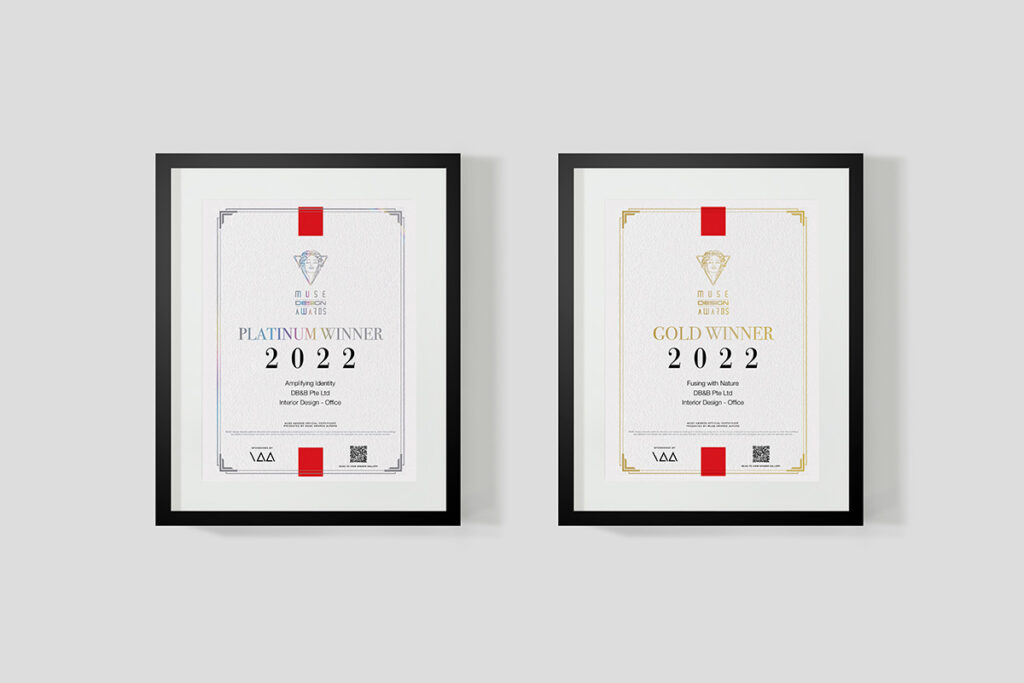
SINGAPORE – A list of Season 1 winners for the 2022 MUSE Creative and Design Awards has been officially released by the International Awards Associate (IAA). Having received over 6,000 entries from all over the globe, the MUSE Creative Awards and MUSE Design Awards are two leading award programs created to honor creative and design professionals for their excellence. For its 2022 Season 1 cycle, DB&B clinches two awards – a Platinum and a Gold, in the Interior Design category of the competition for Amazon and SAP respectively. “It is an honour for us to be recognised for our dedication to design excellence. Moving forward, we hope to continuously reflect the essence of future workspaces with innovative and sustainable design solutions,” shares Jeanette Siew, Executive Director of DB&B. The MUSE Awards are hosted by the International Awards Associate (IAA), who aims to promote excellence in various creative and design industries by providing professionals a platform to compete against their peers. In 2021, DB&B was honoured with a Gold award at Muse Design Awards for their forward-thinking design for Invista, Shanghai. Read more here.
Four-Time Winner at A’Design Award and Competition
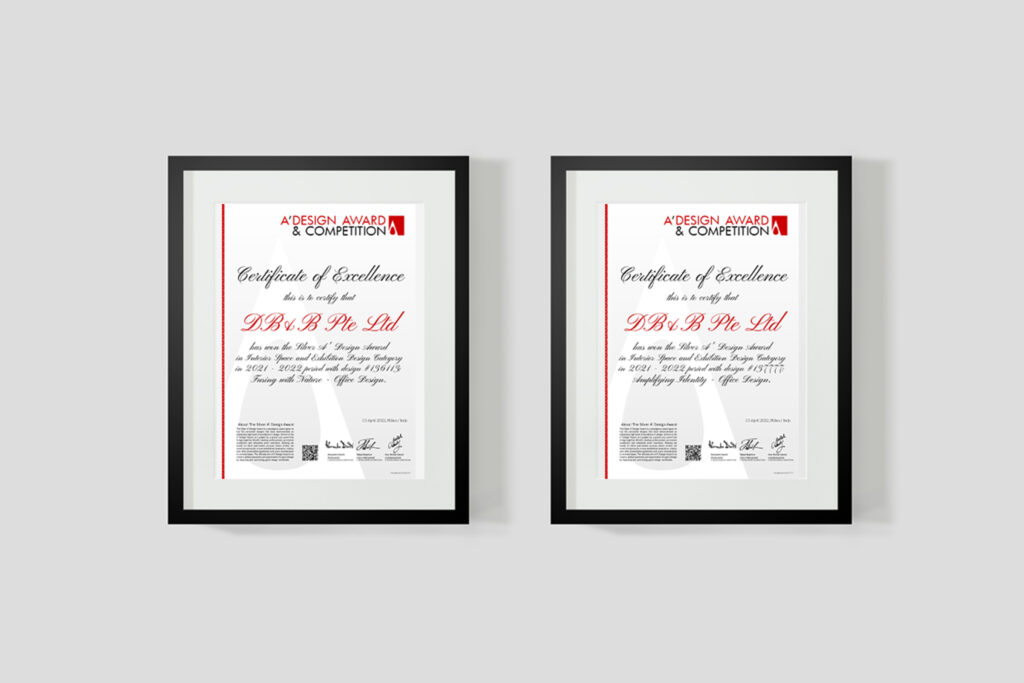
SINGAPORE – A’ Design Award and Competition has announced DB&B’s double win at the 2021-2022 period awards for Amazon and SAP. Both designs have been awarded with the prestigious Silver A’ Design Award in Interior Space and Exhibition Design Category. This accolade marks both projects’ second design award achieved this year – a remarkable recognition of the team’s outstanding work – adopting a bold yet pragmatic approach towards building workplaces for the future. “With the rapid evolution of workplace designs, we are thankful to have been recognised at A’ Design Awards over the past four years. It is our passion to create inspiring workplaces that shape the way people work as a team, and as individuals to deliver their best work,” shares Jeanette Siew, Executive Director of DB&B. The Silver A’ Design Award is a prestigious award given to top 5% percentile designs that has achieved an exemplary level of excellence in design. A’ Design Award and Competition aims to highlight the excellent qualifications of best interior designs and greatest interior design concepts worldwide. The A’ Design Accolades are organized and awarded annually and internationally in multiple categories to reach a wide, design-oriented audience. Read about our past winning projects here: 2020-2021 Gold Award Winner- Becton Dickinson 2019-2020 Bronze Award Winner – Shopee 2018-2019 Bronze Award Winner – Distrii 2018-2019 Bronze Award Winner – Danone, Asia Pacific